Why Are Smartphones Getting More Expensive in 2026? The RAM Crisis Explained
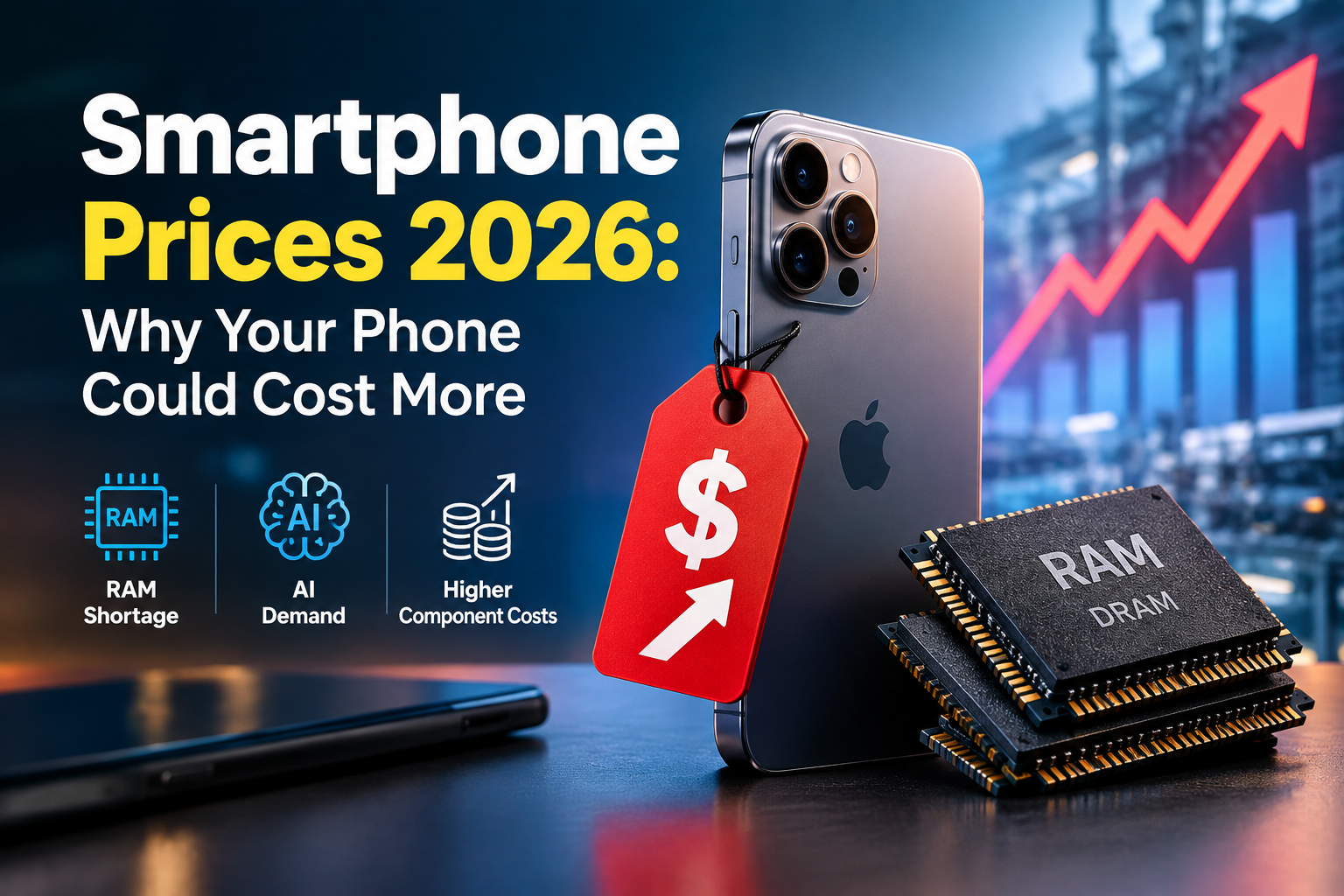
Smartphones are getting more expensive in 2026, and RAM and memory costs are a major reason why. The global AI boom is increasing demand for high-performance memory, tightening supplies of conventional DRAM and NAND, and pushing smartphone manufacturing costs higher.
I’ve been watching this market closely, and the numbers are hard to ignore: IDC now expects global smartphone shipments to fall 16.7% in 2026, while the average smartphone selling price is forecast to rise 27.6% to $581.
So, why are smartphones getting more expensive?
The answer starts with AI, but it ends with something you use every day: the memory inside your phone.
Smartphone Prices 2026: What Is Actually Happening?
The smartphone prices 2026 story is bigger than manufacturers simply deciding to charge more. A major change is happening in the cost of the components used to build modern phones.
Memory prices have climbed sharply, and manufacturers now have to decide how to deal with those higher costs.
Some brands can increase prices.
Others can reduce specifications.
Some may focus more heavily on premium phones where profit margins are higher.
And some low-cost models may simply become harder to produce profitably.
IDC says memory costs are up nearly 300% from a year ago and now account for more than 65% of the bill of materials in low-end smartphones.
That is a massive change.
2026 Smartphone Market at a Glance
| Market factor | What is happening | What it means for you |
|---|---|---|
| DRAM prices | Rising sharply | Higher phone manufacturing costs |
| AI memory demand | Growing rapidly | More pressure on memory supply |
| NAND storage | Under supply pressure | Storage upgrades can cost more |
| Budget phones | Facing the greatest pressure | Fewer cheap options |
| Premium phones | More resilient | Brands may focus on expensive models |
| Smartphone ASP | Rising | Average phones are becoming more expensive |
The important point is this: the smartphone market is shrinking in volume while becoming more expensive in value.
Why Is There a RAM Shortage in 2026?
The RAM shortage 2026 situation is closely connected to the explosive growth of artificial intelligence.
AI data centers need enormous amounts of memory. They use specialized technologies such as HBM (High Bandwidth Memory) alongside server DRAM to process demanding AI workloads.
This creates a supply problem.
Memory manufacturers have limited production capacity. When demand for high-value AI memory rises, manufacturers have a strong financial incentive to prioritize those products.
Counterpoint Research says the memory shortage is being driven partly by manufacturers shifting capacity toward high-value products because of increasing HBM demand from AI servers.
In simple terms:
AI demand → higher memory demand → tighter supply → higher memory prices → higher smartphone costs.
And no, this does not mean AI companies are literally taking the RAM out of your phone.
It means the same global memory industry is trying to serve two enormous markets at once.
How AI Is Driving Up Smartphone Memory Costs
This is where things get interesting.
For years, smartphone buyers became accustomed to a simple pattern: newer phones offered more RAM and storage without huge increases in price.
That pattern is now under pressure.
AI infrastructure requires enormous quantities of high-performance memory. Meanwhile, smartphone manufacturers still need LPDDR RAM and NAND storage for millions of consumer devices.
Counterpoint reports that smartphone memory prices increased by more than 80% quarter over quarter in Q2 2026.
Another Counterpoint analysis found that smartphone memory prices surged 300% year over year in Q2 2026, with memory costs surpassing SoC costs across smartphone segments.
That last point is especially important.
DRAM Has Become a Major Smartphone Cost
The SoC, or system-on-chip, has traditionally been one of the most expensive components in a smartphone.
But according to Counterpoint Research, DRAM has now surpassed the SoC as the most expensive individual component in a smartphone.
That changes the economics of building a phone.
If memory becomes significantly more expensive, manufacturers cannot simply ignore it.
They have to make a choice.
Raise the price.
Reduce the specification.
Accept a lower margin.
Or change the product itself.
Which Smartphones Are Being Hit Hardest?
The effects of the memory chip shortage aren’t equal across the market.
Budget phones are particularly vulnerable because their profit margins are already small. A relatively modest increase in component costs can make a low-cost phone much harder to produce profitably.
Counterpoint says the low-end smartphone segment is losing ground as memory manufacturers prioritize higher-value products.
Budget Smartphones
This is where you could notice the biggest change.
Imagine a manufacturer selling a phone for $100.
It cannot simply add another $30 or $40 to its manufacturing cost and expect the business to work exactly as before.
Instead, the company could:
- Increase the retail price.
- Reduce RAM or storage.
- Use older components.
- Remove some features.
- Stop selling certain models.
Counterpoint says the component cost of comparable low-end smartphones increased about 70% year over year in Q2 2026, with almost all of that increase driven by memory.
That is why the cheapest smartphones are under such intense pressure.
Mid-Range Smartphones
The mid-range market is also vulnerable.
These phones usually compete by offering you more specifications for your money: more RAM, more storage, better cameras and faster processors.
But when DRAM prices rise, that formula becomes harder to maintain.
You could therefore see manufacturers change RAM and storage configurations or push customers toward slightly more expensive models.
Flagship Smartphones
Flagship phones have an advantage.
A $900 or $1,200 smartphone generally has more room for manufacturers to absorb higher component costs than a $100 phone.
That’s one reason premium smartphones have been more resilient.
Counterpoint reported that Apple and Samsung are relatively insulated because of their stronger premium portfolios, while brands more dependent on lower-priced devices face greater pressure.
Will iPhones and Samsung Phones Get More Expensive?
This is probably the question most readers will care about.
The honest answer is: some already have, and more price pressure is possible.
Counterpoint reported that Samsung and Motorola raised prices on key US smartphone models during 2026, while Apple had not raised prices across its models at the time of its June analysis. Counterpoint also said further price increases were expected during the year.
Apple’s situation is especially interesting.
Apple can potentially absorb some component-cost increases because of its premium positioning. But that does not mean the company is completely protected from the smartphone price increase 2026 trend.
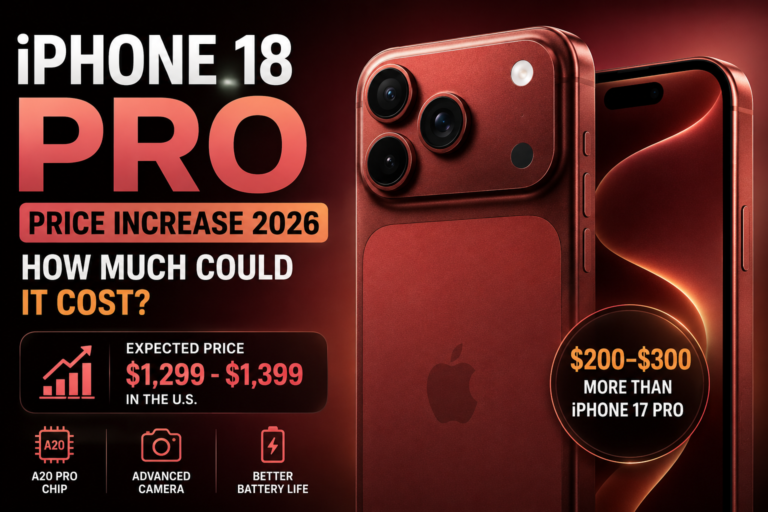
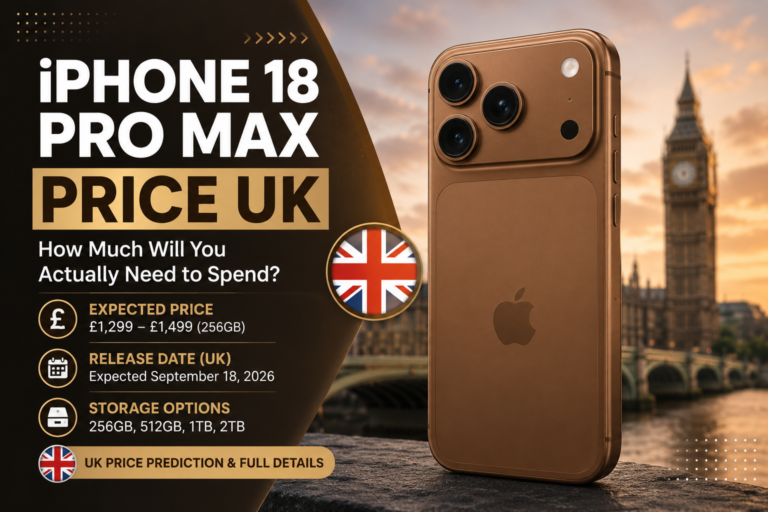
For more information about Apple’s pricing pressure, you can also read my detailed article on the iPhone 18 Pro price increase in 2026.
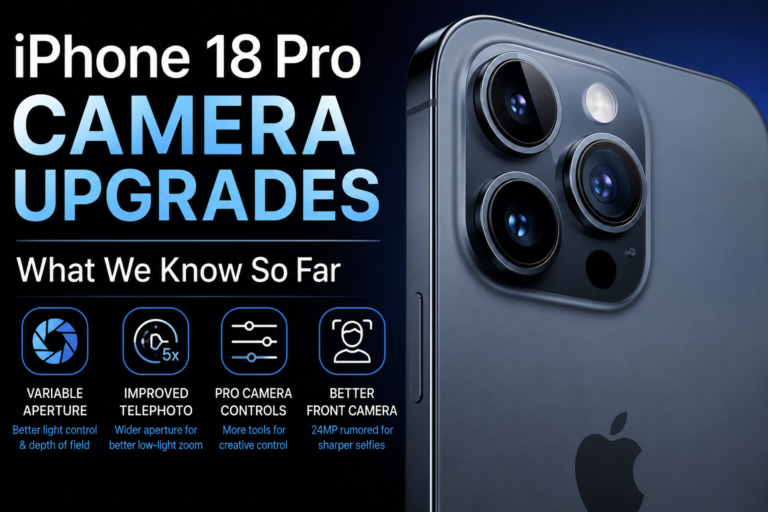
And if you’re interested in other aspects of Apple’s upcoming flagship, check out my coverage of the iPhone 18 Pro camera upgrades and iPhone 18 Pro battery life.
These internal links also help put the broader memory crisis into the context of an actual flagship smartphone.
How Much Could Smartphone Prices Increase?
There isn’t one universal percentage because pricing differs by brand, country and smartphone category.
However, the current numbers are significant.
IDC forecasts that the average smartphone selling price will reach $581 in 2026, representing a 27.6% increase from the previous year. At the same time, worldwide smartphone shipments are expected to fall 16.7%.
Counterpoint’s data also shows how serious the problem has become.
Global smartphone shipments fell 11% year over year in Q2 2026, reaching the lowest second-quarter level since 2013.
So we have a strange situation:
Fewer smartphones are being sold, but the average smartphone is becoming more expensive.
That’s one of the clearest signs that the phone prices 2026 story is not just a temporary pricing adjustment.
Will Budget Phones Disappear?
They probably won’t disappear completely, but the cheapest smartphones could become much less attractive.
IDC says the low end of the market is facing an existential challenge because memory costs have become such a large part of the bill of materials.
That could lead to a different smartphone market.
Instead of getting an impressive $100 phone with lots of RAM and storage, you might have to spend more to get similar specifications.
Manufacturers could also prioritize phones priced above $200 because those devices offer better margins.
Counterpoint expects the memory shortage to gradually ease from the end of 2027, but the recovery may take time.
Should You Buy a Smartphone Now or Wait?
This is where the situation becomes practical.
If your current phone still works perfectly, you don’t necessarily need to rush out and buy a new one.
But waiting indefinitely isn’t guaranteed to save you money either.
Buy Now If You Need a Phone
If your current device is broken, extremely slow or no longer receives important security updates, buying a phone now can make sense.
Before purchasing, follow these steps:
- Compare the current retail price.
- Check the amount of RAM.
- Check the storage capacity.
- Compare the processor with competing models.
- Check how long the manufacturer promises software updates.
- Compare last year’s flagship.
- Look for discounts before paying full price.
And remember something important:
More RAM does not automatically mean a better phone.
A well-optimized 8GB phone can provide a better experience than a poorly optimized phone advertising 16GB.
Wait If Your Current Phone Is Still Good
If your current phone works well, waiting can be reasonable.
You can monitor new launches and compare prices later.
You may also find excellent deals on previous-generation flagship phones once newer models arrive.
In a market where smartphone prices 2026 are under pressure, an older flagship at a major discount could offer better value than a brand-new phone at full retail price.
When Will Smartphone Prices Go Down?
This is the difficult part.
I wouldn’t expect memory prices to suddenly return to their previous levels.
Counterpoint expects the smartphone memory shortage to persist until H2 2027, while IDC says memory prices are expected to remain elevated and could continue rising until at least 2028.
New semiconductor manufacturing capacity takes years to build.
That means even if companies announce billions of dollars in new investment today, consumers may not see the full effect immediately.
So if you’re hoping that phone prices will suddenly become much cheaper next month, I wouldn’t plan around that.
What Does the RAM Crisis Mean for Your Next Phone?
The biggest change may not simply be higher prices.
It could be less hardware for the same money.
Manufacturers have several ways to respond to expensive memory:
- Increase prices.
- Reduce RAM.
- Reduce storage.
- Use older-generation components.
- Remove lower-margin models.
- Focus more heavily on premium smartphones.
Counterpoint has already reported that smartphone manufacturers are adopting older-generation SoCs and downgrading specifications in some mainstream devices to protect margins.
That means you should look beyond the headline price when comparing phones.
A $399 smartphone in 2026 isn’t automatically equivalent to a $399 smartphone from 2025.
The specifications may have changed.
Frequently Asked Questions
Why are smartphones getting more expensive in 2026?
The biggest factors include rising DRAM and NAND prices, strong AI memory demand, constrained memory supply and increasing smartphone manufacturing costs. Manufacturers can respond by raising prices, reducing specifications or accepting lower margins.
Why is RAM so expensive in 2026?
AI data centers require huge amounts of high-performance memory. Memory manufacturers are prioritizing higher-value products such as HBM and server memory, contributing to tighter supplies of conventional memory used in smartphones.
Is AI causing the smartphone RAM shortage?
AI is a major contributor, but it is not the only factor. The current shortage is the result of supply, manufacturing capacity and rapidly changing demand across the global memory industry.
Will smartphone prices go down in 2027?
They could eventually decline, but there is no guarantee of a quick recovery. Current industry forecasts suggest memory constraints may continue through 2027 and potentially beyond.
Are budget smartphones affected more than flagship phones?
Yes. Budget smartphones generally have thinner margins, making them much more sensitive to rising memory costs. Premium manufacturers have more room to absorb higher component costs.
Final Verdict: The RAM Crisis Is Changing the Smartphone Market
The smartphone market is entering a very different era.
For years, you could expect each new generation to deliver more RAM, more storage and better performance without dramatically increasing the price.
In 2026, that assumption is being challenged.
The AI boom is increasing demand for memory. Manufacturers are prioritizing high-value memory products. DRAM and NAND costs are rising. Smartphone manufacturers are facing higher bills, and those costs eventually have to go somewhere.
Sometimes they reach the customer through a higher price.
Sometimes they appear as reduced specifications.
And sometimes they simply make the cheapest phones harder to produce.
I don’t think you should panic and buy a smartphone just because prices are rising.
Instead, buy based on your actual needs.
If you need a phone today, compare the complete package: RAM, storage, processor, camera, battery, software support and price.
If your current phone works well, keep using it and watch the market.
The most important lesson from the RAM shortage 2026 isn’t that every smartphone will suddenly become unaffordable.
It’s that you now need to pay much closer attention to what you’re getting for your money.
Because in 2026, the cheapest phone isn’t necessarily the best deal—and the phone with the biggest RAM number isn’t necessarily the smartest purchase.